
Warblers are extremely confusing birds and hard to indentify the correct species in the wild.
1/ The eastern crowned warbler (Phylloscopus coronatus)
- Face (from top down): gray line, white line, dark eyeline, whitish (or grey-whitish to the white throat)
- Gray line in the middle of the head;
- White supercilliums;
- One weak or blur wingbar;
- Yellow or yellowish vent;
2/ The Arctic warbler (Phylloscopus borealis)
Similar to the eastern crowned warbler but lower face is grayish-olive (dark), white vent as the belly, no grayish line from base of the bill to the nape as the eastern crowned warbler.
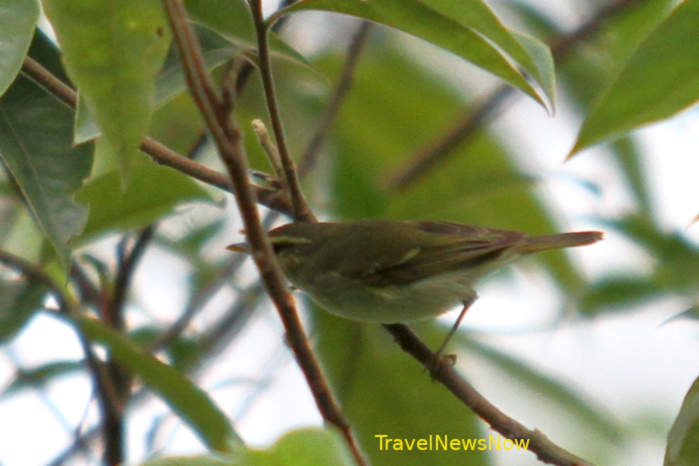
3/ The Two-barred Warbler (Phylloscopus plumbeitarsus)
historically categorized as conspecific (the same species) with the Greenish Warbler.
• Facial Markings: More similar to the eastern crowned warbler than the arctic warbler. It displays a prominent, dark-bordered white supercilium (eyebrow stripe) that extends all the way forward to the base of its upper bill, coupled with a dark eye-stripe behind the eye.
• Wingbars: True to its name, it possesses two thin, distinct white wingbars. The lower wingbar is typically broader and longer.
• Bare Parts: The bill is dark brown above with an orange-pink lower mandible; the legs and feet are a noticeably dark brownish-grey. [1, 2, 3, 4]
Similar Species Comparison
Feature Two-barred Warbler Greenish Warbler Arctic Warbler Yellow-browed Warbler
Wingbars Two distinct, prominent bars Usually only one wingbar Often single or weaker Two bars, but stouter bird
Supercilium Reaches the base of the bill Reaches the base of the bill Stops well short of the bill Weaker, less contrasting
Upperparts Brighter green Dull, more olive-green More olive-grey Darker grey-green
Song Notes Quick trills; lacks introductory notes Has two distinct introductory notes Strong, rattling trill High pitch, rhythmic call